

“Reconciliation Education”
A Canadian educator's perspective

Today’s piece is a compiled 8-part essay written by pseudonymous Canadian writer and educator Igor Stravinsky. It originally appeared as a series in the Woke Watch Canada newsletter in March of 2024. It is based on the outline of the "journey of truth and reconciliation" being promoted by the National Center for Truth and Reconciliation (NCTR). According to Igor, his “motivation for this series was to expose the fact that kids are not being educated about Indigenous history but rather indoctrinated into a narrative which serves the Indigenous grievance industry, not the vast majority of Canadians, neither Indigenous nor non-Indigenous.” -
“Reconciliation Education”
By Igor Stravinsky (Teacher, commentator)
Part 1: Disharmony and Hostility
Introduction
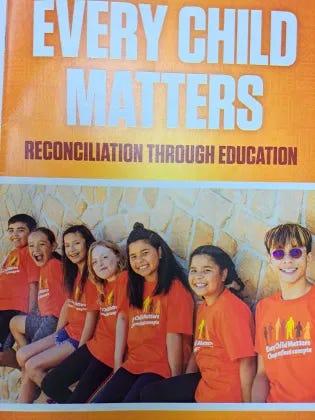
Most Canadians would agree that we want children to be educated about reconciliation with our Indigenous citizens. But what should that look like? What does reconciliation even mean in this context? To answer that question, we must start with some basic definitions.
What does it mean to educate?
Dictionaries are not much help when it comes to trying to nail down exactly what education entails. Merriam Webster offers up the principal definition “to provide schooling for” and a secondary “to train by formal instruction and supervised practice especially in a skill, trade, or profession” Dictionary.com suggests “to develop the faculties and powers of (a person) by teaching, instruction, or schooling” or “to qualify by instruction or training for a particular calling, practice, etc.”.
But it is fair to say that most Canadians view education as a means to inculcate students with knowledge and skills within the framework of the broader enlightenment traditions of the West. According to Fred Van Leeuwen of the Royal Academic Society,
The enlightenment of the 17th and 18th centuries sought to liberate the human mind from dogmas and encourage skepticism, tolerance, and critical thinking. It rejected the blinkers that limit exploration and human development.
This enlightenment view sees education in opposition to indoctrination, which is simply to imbue with doctrine or idea, and this has been its bedrock principle in Western societies for centuries (not that they always lived up to it!). If you ask most Canadians today, they would still support it. But is this the approach we are taking with regard to Indigenous studies in Canadian schools today? Based on my experience in Ontario, specifically the Peel District School Board, I would say it is not, and I have good reason to believe that the PDSB is not an outlier in this regard, but rather is typical.
What is “reconciliation” in the context of Canadian Indigenous-non Indigenous relations?
Dictionaries align pretty well on this one. Merriam Webster suggests that to reconcile is to “to restore to friendship or harmony”, while dictionary.com tells us reconciliation is “the act of coming to an understanding and putting an end to hostility, as when former enemies agree to an amicable truce”. The need for reconciliation with Indigenous people in Canada is thus predicated on the assumption that they have been treated wrongly in the past by non-Indigenous people, resulting in current disharmony and hostility.
Thus, in schools, an enlightenment-inspired study of Indigenous reconciliation would entail a dispassionate and conscientious analysis of the events that led up to the estrangement between Indigenous people and the rest of us here in Canada. It would start by asking what the conditions are today which are symptomatic of this discord, then go on to determine the root causes of these symptoms. Finally, such a study would consider rational and practical remedies for these symptoms and identify a feasible pathway to reconciliation.
In this series, I will attempt to show that the approach being taken in our schools reflects that taken by our political class, and that it is failing in every way to meet the standard outlined above.
Disharmony and hostility: The need for reconciliation
Canada is a rich and democratic country. It is consistently rated as one of the best in which to live by various authorities based on overall measures such as quality of life. Yet the standard of living for Indigenous people here lags well behind other Canadians. This includes (but is not limited to)
Higher rates of poverty
Lower life expectancy
Lower levels of education
Higher incidents of serious health problems, physical and mental
Higher infant mortality
Higher rates of substance abuse
Higher rates of all types of violence
Higher rates of criminality
There is no credible evidence that Indigenous people are in any way intrinsically inclined towards any of the above socioeconomic problems. So the official narrative is that these things are all the result of “colonialism” and various forms of “oppression”. The educational resources made available to school teachers in Canada promote this narrative to the exclusion of any other kind of explanation. They take what is, in fact, a complex situation and present it as a simple case of racism and injustice.
In this series, I will be demonstrating that this simplistic and dishonest narrative is in fact an obstacle to ameliorating the long list of problems facing Indigenous people, thus the education young people are receiving, far from enabling them as agents of positive change, is setting them up to perpetuate, and even exacerbate these issues moving us ever farther from rather than closer to reconciliation.
Part 2: Pre-Contact Indigenous People
In my previous missive of this series, I outlined the socio-economic problems facing Indigenous people in Canada and identified the official narrative, promoted by the federal government, Indigenous leaders, and their non-Indigenous allies. This narrative is basically that colonialism, racism, and oppression are the sole (or at least the major) causes of the long list of socio-economic difficulties so many Indigenous people are suffering from today. The narrative focuses on colonialism, oppression, as well as “intergenerational trauma” and “genocide”, neither of which claims stand up to the slightest bit of objective scrutiny and analysis. The genocide claim is particularly laughable in that the Indigenous population has increased from about 100 thousand in 1900 to nearly 2 million today, which is at least four times the pre contact Indigenous population.
Pre-contact living conditions for Indigenous people
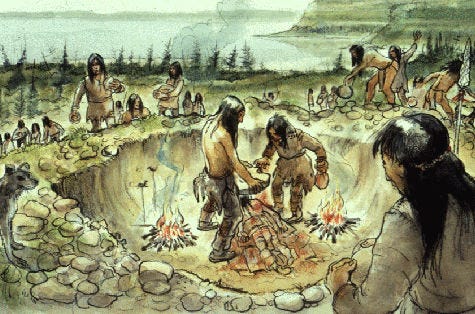
In order to blame all the problems on European settlers and their descendants, the narrative starts out by implying that life in pre-contact Canada was idyllic. Students are led to believe that this was a time of peace, cooperation, and prosperity based on teachings and knowledge systems that were superior to what we have now (the Western enlightenment-based ethos and the scientific method). Students are told that people lived well— sustainably, with little environmental impact, and with a respect for each other and the land, with which their relationship was one of stewardship and symbiotic coexistence.
This is presented in contrast to the purported European world view, which kids are told was, and still is, characterized by exploitation and a belief in European superiority. Europeans are described as ruthless and greedy people who just wanted to enrich themselves by maximally extracting any and all resources without regard for impacts on the environment or Indigenous people. It is presented as a case of good vs. evil.
But what was life really like for pre-contact Indigenous people? Certainly their stone age way of living combined with their small, scattered population was eco-friendly, but was their standard of living, on balance, better than that of modern Canada? Were they more moral, or wiser than modern non-Indigenous Canadians? An honest answer to these questions demands a hard look at the available evidence and a willingness to draw conclusions wherever that evidence may lead.
And that evidence shows that pre-contact indigenous people demonstrated the full range of behaviors we find in all stone age hunter gatherer/horticulturalist societies. While there is much to admire about these people, who were able to survive in a challenging environment with only the most rudimentary of wooden, stone, and bone tools, the evidence is clear that, compared to modern times
life expectancy was very low
child mortality was very high
warfare was endemic
slavery was a common practice
violence of all kinds was common
people suffered a great deal from simple health problems which would now be easily treatable with antibiotics and surgical techniques.
It should also be pointed out that while the allegation that Indigenous people were the victims of genocide at the hands of the government of Canada is ridiculous, it is a well-established (but rarely mentioned) fact that Indigenous people carried out genocides against one another on a regular basis, for example the genocide of the Hurons by the Iroquois.
Wiser and more moral?
Students are constantly told we “settlers” have much to learn from the Indigenous people. It has been my experience that I can learn things from just about anyone, so I don’t doubt there is some truth to that. But Indigenous activists like to promote “Indigenous ways of knowing” which they are holding up as equally valuable as the scientific method. What are these “ways of knowing”?
Anthropologists tell us that pre-contact Indigenous people employed a kind of pre-scientific approach, which consisted of making observations about their environment and drawing conclusions from those observations. While not entirely without merit, this simplistic approach often leads to misunderstandings and erroneous conclusions, however, because the additional steps of forming hypotheses, making predictions, and conducting controlled experiments are lacking. These steps are essential to understanding the nature of physical reality. Thus, Indigenous people believed things like beaver bones “were to be burned or thrown into the water to help make new beavers”.
This goes a long way to explain why Indigenous technology evolved so little in thousands of years, and demonstrates that an honest look at how Indigenous people lived cannot lead to the conclusion that they were any wiser than Europeans. Their sustainable way of living was a consequence of their low population and low level of technology. As soon as they acquired European technology such as horses and firearms, the impact was “disrupted subsistence economies, wrecked grassland and bison ecologies, … new social inequalities, unhinged gender relations, undermined traditional political hierarchies, and intensified resource competition and warfare” Based on their actions, it is not really fair to claim that Indigenous people were any wiser than Europeans, nor can contemporary Indigenous people be considered wiser or more moral than modern day non Indigenous people.
In my next installment of this series, I will look at the early contact period, a period which is largely glossed over in schools today. It was during this period that Indigenous people made a major switch from subsistence hunter-gatherer horticulturalism to economic engagement with the newcomers.
Part 3: Contact between Indigenous People and Europeans in Canada
My objective in this series is to expose the yawning gap between what kids are being taught in schools and the verified, objective reality of Indigenous history in Canada. What is being taught in schools serves a political purpose and is thus not really education but rather indoctrination. While the captains of the Indigenous Grievance Industry will reap great benefits from this indoctrination, the rest of us, Indigenous and non-Indigenous alike, will suffer.
In part one, I outlined the socio-economic problems facing Indigenous people in Canada today and identified the official narrative, promoted by the federal government, Indigenous leaders, and their non-Indigenous allies, which is essentially that the problems are the fault of non-indigenous people — the result of racism and colonialism. This simplistic and inaccurate narrative has enriched some, but exacerbated the issues for the majority of Indigenous people at great cost to Canadian taxpayers.
In the second part, I critically examined the claim that pre-contact Indigenous people lived well— sustainably, with little environmental impact, and with a respect for each other and the land, with which their relationship was one of stewardship and symbiotic coexistence. In fact, pre-contact indigenous people in Canada lived short, hard lives. They were made up of hundreds of tribal groups perpetually at war, and extreme violence (including slavery and even genocide) were common. Their low environmental impact was the result of a small, scattered population and a low level of technology.
In this installment, I will take a look at how life abruptly and radically changed for Indigenous people in the 200 or so years after contact. Students are taught that the Europeans “disrupted relationships across North America”. The implication is that there was a system in place and all things were in balance and working well and that Europeans forced disastrous changes on the Indigenous people who previously needed nothing, were doing great, and would have been fine had they been left alone to continue in the same way indefinitely.
This false premise— that hundreds of Indigenous groups, who spoke different languages and had very different cultures, were peacefully coexisting and could somehow have continued doing so in spite of the utter reinvention of human existence taking place in the rest of the world, is key to the narrative that Europeans were disruptors. In fact, as mentioned above, life was short and hard and warfare (and torture, murder, slavery and even genocide) were the norm as Indigenous groups competed with one another for resources. This is the common pattern for all human societies throughout all time, why would we think the Indigenous people of North America, who were fully human, would be any different?
The First Canadians?
No one knows who exactly the first people were to enter North America. Most textbooks still maintain the Beringian Hypothesis which explains the arrival of human as having been facilitated by the existence, in the waning days of the last glacial maximum, of a “land bridge” (really more like a causeway) which connected Siberia and Alaska at the time, due to much lower sea levels. An ice-free corridor is said to have opened up around then, through which the intrepid newcomers passed into what is now the northern United States, and from there into Central and South America. But new evidence suggests that people were in fact living on the continent at least 22 thousand years ago, at which time such a transit would have been impossible.
What is absolutely clear, is that people arrived in the continent in waves, and groups that arrived split off into subgroups. The eternal quest for dominance, which had been going on since humans first walked the earth, then continued apace in the new land.
Pre-European conquest
The first people confirmed to have inhabited Canada’s far north were the Dorset People. They are assumed to have arrived by boat because by the time they arrived, about 2800 years ago, the “land bridge” had been submerged for millennia. Travel by foot across the sea ice is not out of the question but would have been perilous and seems unlikely. The Dorset People existed until about 700 years ago, until the arrival of the Thule People (ancestors of the modern Inuit).
The Thule were superior boat builders and had superior tools and weapons. They displaced the Dorset People in a relatively short period of time. It is hard to imagine this was peaceful! This is simply how prehistoric people operated. Those who developed better technology spread and others gave way. By the time Europeans arrived, this kind of thing had been going on in North America for at least 13 thousand years, and probably much longer. Do the Inuit recite land acknowledgements about the Dorset People?
First Contact with Europeans
First contact between the Indigenous people of what is now Canada and Europeans took place around 1000 CE when Norse People (AKA “Vikings”) established L’Anse Aux Meadows near the northern tip of the Island of Newfoundland. The Norse presence was brief- 10 to 20 years. Unable to peacefully coexist with the natives, they packed up and headed back to Greenland whence they came.
Later European Contact
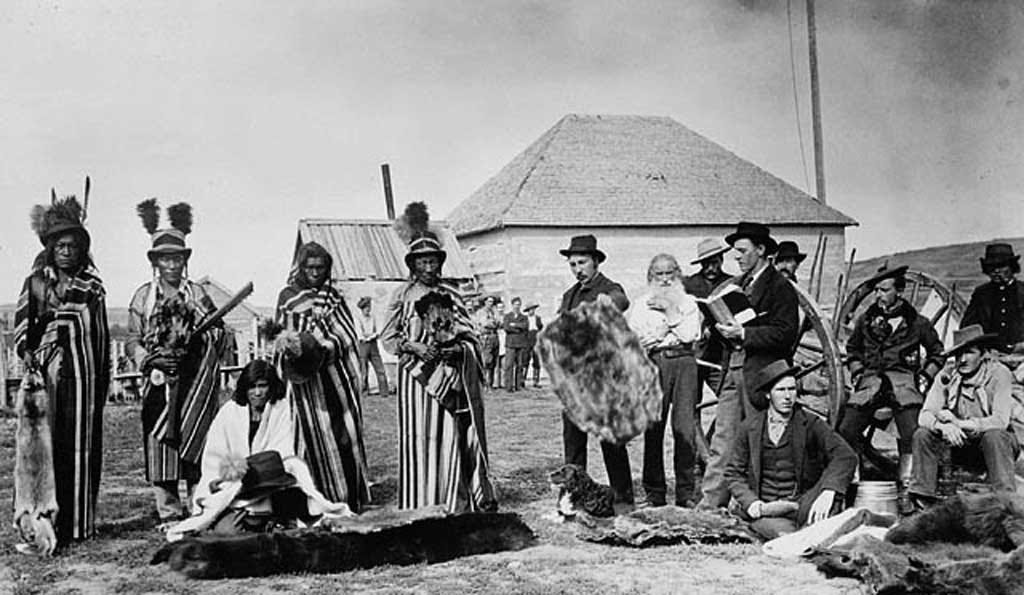
Later European groups set up permanent settlements. These Europeans quickly realized that there was a commodity the Natives could provide that would earn them a hefty profit back in Europe, and the Indigenous people were only too eager to trade that commodity (Beaver Pelts) for European tools and weapons, which were far superior to the wood, stone, and bone implements they had. Indeed, this trade was so lucrative that it changed the whole Indigenous economic system. It didn’t take long for them to become utterly dependent on this fur trade, and Indigenous groups fought each other fiercely for access to the European traders. What resulted is what is now known as the Beaver Wars, during the course of which the Iroquois wiped out the Hurons, Eries, and other Indigenous groups.
Fashions change. By 1850, Beaver hats were no longer popular in Europe. It had been a good run of over 200 years, but the Indigenous people were in dire straits because they had become economically dependent on the trade. With the population of what would soon become Canada expanding rapidly, and the whole world on the brink of the industrial revolution, reverting back to pre-contact social and economic systems was a non-starter.
This left the colonial governments, and later the government of Canada, in a bind: There was a population of over 100 thousand mostly illiterate Indigenous people with no viable way to make a living. What to do? These people were suffering terribly, mostly due to infectious diseases spread by Europeans, such as smallpox and tuberculosis, but also from malnutrition and even out and out starvation.
Had the colonial governments taken their lead from the Indigenous people themselves, the colonists would simply have stepped back and let these people die off. One culture displaces another — that was the preindustrial, premodern way in North America and everywhere else.
But they did not do that. What they did was totally out of character with anything any human civilization had ever done before. It was something that is in fact the absolute antithesis of the evil that our schools today are ascribing to colonial and Canadian governments. Refusing to acknowledge it is the Indigenous Grievance Industry’s “big lie”.
Part 4: Did an Incipient Canada engage in damaging actions with regard to Indigenous people?

In the first three parts of this series, I described how students in Ontario schools are being indoctrinated into a narrative with regard to Indigenous people/history in the Peel District School Board, a narrative based on selected, distorted, de-contexed, and even blatantly false information.
I debunked some of the things schools kids are being told— that non-Indigenous people, past and present, are to blame for the disproportionate levels of social ills from which Indigenous people suffer today, that before first contact with Europeans life was good for Indigenous people, and that after first contact things went from bad to worse entirely due to the greed and cruelty of the newcomers.
In this installment, I will discuss what happened next. Students are told “As Canada takes its first steps as a country, it enacts a series of damaging actions towards Indigenous people”. What are these “damaging actions”
The Indian Residential School System (IRSS)
Readers of Woke Watch Canada have read plenty about the false narrative of the IRSS being propagated by the Indigenous Grievance Industry, so I’ll keep this short. Kids in Ontario schools are “learning” that
All kids for seven generations were forced to attend residential schools. Facts:
Only 30% of status Indigenous kids (1/6th of all indigenous kids) attended the schools and for an average duration of less than 5 years.
Parents had to apply and many schools had waiting lists.
The schools, by default, served as orphanages to many Indigenous kids who were abandoned or whose parents died or were incompetent often due to alcohol abuse.
The schools were set up to assimilate the Indigenous people and “kill the Indian in the child”.
This infamous quote is often attributed to a variety of Canadian historical figures including Sir John A. Macdonald and poet, writer, and civil servant Duncan Campbell Scott, but it was never documented to have been said by any historically significant Canadian.
Scott was clear about his view at the time that Indigenous people must modernize and the goal was for them to be financially independent, not a controversial point of view although the way he expressed it may seem blunt in today's politically sensitive climate.
Indigenous parents, including chiefs and other leaders, lined up to send their kids to the schools because there were no local alternatives and they realized that an education was going to be crucial to success in the modern world.
Many IRSS graduates went on to become leaders themselves, and the education they received, which included the ability to speak, read, and write in English allowed them to connect with hundreds of groups of other Indigenous people and advocate for their rights.
“Assimilation” has become a dirty word, but is in fact the way that people survive in a changing world. It has always been so and what possible alternative existed for a group of about 100 thousand Indigenous people living alongside 5 million newcomers and their descendants (as of 1900 CE)? Assimilation does not mean abandoning your culture, it means adapting to a new social and economic reality.
Many of the IRS took deliberate steps to maintain some vestige of the local Indigenous culture, and speaking Indigenous languages was generally only forbidden in classes or other formal school events.
The schools were cesspools of neglect, abuse and even murder.
While there were certainly cases of abuse and neglect, these things were sadly the norm in all institutions of this type at the time.
There is no evidence they were any more frequent in the IRS than in other types of residential schools or orphanages.
Claims of mass murder, based on ground penetrating radar images of soil disturbances, are completely unfounded. There is not one single documented case of the murder of an IRS student at an IRS.
Students are being told that the Indian Act was intended to relegate Indigenous people to second class status, similar to Jim Crow Laws or South African Apartheid. While this Act clearly infringed upon what today are considered universal rights of citizenship with respect to Indigenous people in Canada, it also protected Indigenous peoples’ status and privileges, which is why Indigenous leaders do not want to abolish it, even today.
Students are not told that full and equal citizenship for Indigenous people was in fact always the ultimate goal of the government of Canada up until the late 1960’s, culminating in the White Paper of 1969, which, had it been accepted, would have eliminated all legal distinctions between Indigenous people and other citizens. This vision of equality for all was rejected by Indigenous leaders in favor of a strategy (ideology?) of parallelism (often referred to as the “two row wampum”) of separate development. The idea was that each of the over 600 “First Nations”(some with fewer than 200 members) would exist as an equal sovereign entity alongside Canada. This absurd idea remains the operating principle of the Government of Canada today and is so deeply entrenched that changing it anytime soon seems impossible. For a full discussion of this topic read Separate but Unequal by Frances Widdowson.
While kids in school are taught that the misery that so often characterizes life on reserves, where the socioeconomic issues discussed in part 1 of this series are most severe, is due to the Indigenous people being forced onto reserves, the reality is far more nuanced. The reserve system has a complex history. It made some sense at its inception but is a total anachronism today. By now the whole system should have been dismantled, but as mentioned above, we are going in the opposite direction.
The Destruction of Lands
Students learn that our modern way of living is destructive and unsustainable. We are supposedly on a pathway to Armageddon due to greed and a disconnection from nature. The Indigenous people are lionized for having lived in concert with nature while modern ways of life are denounced. If only we had the wisdom to listen to the Indigenous people and learn their “ways of knowing”.

The hard truth is, as I discussed in part 2 of this series, that the standard of living pre-industrial people had was very low. Life was short and very hard. By comparison life today, even for relatively poor people, is easy. That said, the price we have paid, in terms of environmental impacts, for these massive advances in quality of life has undeniably been high. But what is needed is modern solutions to modern problems, not delusions about reverting to pre-industrial economic systems or ways of living. The truth is that no one, Indigenous or not, really wants to live the way people did centuries ago.
Modern things are not all bad, and we are not, as a species, in a situation of existential crisis. An excellent book on the subject is Apocalypse Never by renowned environmentalist Michael Shellenberger. In it, he debunks the hysteria about current environmental challenges, proposes practical solutions, and puts the lie to sensational (but false) claims that we are going to turn the Earth into a planet like Venus or engineer a 6th mass extinction by continuing to enjoy a high standard of living and working to improve the quality of life for everyone.
Renaming Places and Spaces
Saskatchewan. Manitoba. Ottawa. Lake Huron. Lake Erie. Mississauga. Algonquin Provincial Park. Etc. etc. etc. Canada has hundreds (thousands?) of place names that are Indigenous. When it comes to place and space names, the activists are rebels without a cause. Are we supposed to rename everything to what Indigenous people called it hundreds of years ago? Hundreds of languages were being spoken back then and these places all had multiple place names. Which one should we use? Canada has changed entirely since the precontact days, and many of our place names should reflect that too.
These place names were not chosen at random but rather have a historical context. For example, the former British Columbian town of Queen Charlotte was recently renamed to Daajing Giids (DAW-jing GEEDS). According to The Macmillan Book of Canadian Place Names, by William Hamilton, “The name ‘Queen Charlotte’ dates back to 1787 when Captain George Dixon — English sea captain, explorer, and maritime fur trader, was on a trading cruise along the coast. He named the island for his two hundred-ton vessel, the Queen Charlotte.]“ This name thus encapsulated an important point in the history of the area, that is to say the history of the future Canada. On the other hand, Daajing Giids apparently means “the hat of a child of a chief”. The sole purpose of the name change is thus to draw attention to the fact that Indigenous people were the first inhabitants of the area, as if anyone didn’t know that.
Canada did not engage in any intentionally damaging actions, on the contrary it made extraordinary efforts to support and include Indigenous people, who nevertheless suffered due to the basic fact of a clash of civilizations. Exposure to European pathogens and being dragged from a stone age mode of existence to the industrial age in the blink of an eye together took a devastating toll, but Canada’s consistent effort to educate and include Indigenous people has led to a population increase from 100 thousand in 1900 to nearly 2 million today. What is holding back Indigenous people now is the belief that their over 600 puny communities can prosper on a “nation to nation” basis with the Government of Canada. With that ideology firmly in place, their long term dependency on rent extraction and reparations, rather than economic engagement with other Canadians and the world, will ensure that the social problems they are facing will continue indefinitely.
In the upcoming installment of this series, I will discuss the next part of the narrative: That the proud and valiant Indigenous people fought back against the attempts of the settlers to destroy their cultures and lands. In fact, what remains of Indigenous cultures is largely thanks to the very colonialists kids are being taught to despise.
Part 5: “Resistance, Conflict, and Opportunity”
So far in this series, I discussed the revisionist history being taught to students in the Peel District School Board: They’re told the abysmal conditions so many Indigenous people live in today are the fault of “settler colonialism”, life pre-contact was good, and the problems that arose with the arrival of the Europeans were the result of the greed and cruelty of the newcomers towards the innocent and peaceful Native people. Actions taken by the Government of Canada, are described as intentionally damaging, rather than sometimes flawed attempts to engage Indigenous people with the modern world thus saving them from extinction. Nuance and complexity are ignored to present a simplistic good vs evil narrative. This is a great disservice to Indigenous and non-Indigenous people alike.
This narrative of Indigenous victims suffering under the boots of oppressive settler colonialism continues with the claim that Indigenous people bravely fought back against the evil oppressors- it was, and is, David vs Goliath. Students in Peel Schools are told that
Indigenous people resisted attempts to destroy their cultures and lands: But other than the Indian Residential Schools (IRS), no specific examples of this purported attempted cultural destruction are provided. There are of course plenty of examples of environmental impacts from industrialization and population increases, but these are side-effects or collateral damage of the process which, overall, has vastly improved quality of life for all Canadians by any measure. That does not excuse past negligent and environmentally destructive industries, nor does it abrogate the responsibility of those who caused the damage to clean it up or compensate the people affected, but it is a far cry from intentional destruction by governments or anyone else.
It is also certainly true that as the non-Native population rapidly increased and that of the Indigenous people declined, areas traditionally occupied (with small, scattered populations) by Indigenous people came to be inhabited by much denser and rapidly growing populations of newcomers. By 1900, there were about 100 thousand Indigenous and nearly five million non-Indigenous people living in Canada. In Peel Region, the Mississaugas of the Credit arrived in about 1700, settling there, and “displacing” other Indigenous people who had been living in the area. Their population was initially about 500, but declined to 200 or so by the 1850s (the population of Upper Canada in 1850 was about a million). In the 1850s the Mississaugas of the Credit voluntarily moved, with a payment of $9 million (2024 dollars) from the government of the day, to a reserve near Brantford Ontario, where they are still located today (population < 800), having received an additional $240 million in 2010.
Some parents tried to prevent their children from being sent to residential schools: Doubtless there were some parents who objected to their kids being sent away to an IRS, but the vast majority of the kids sent to the schools were either registered by their parents, abandoned, or orphaned. That is to say, in general few objected to a child being sent to an IRS- on the contrary most parents were eager to send their kids to a place where they could prepare for a modern future while being fed, housed, and clothed, usually in far better conditions than those that existed on the reserves.
Other parents were forced to send their kids to residential schools: By the early 20th century school attendance was mandatory for all children. If a local school did not exist, then yes Indigenous kids would have been expected to attend an IRS. The truth is that school attendance enforcement was lax, and about 1/3 of Indigenous kids never attended any kind of school at all during the IRS era.
Elders and “knowledge keepers” secretly maintained ceremonies, languages, and traditions: This claim likely induces kids to imagine that police were going around arresting Indigenous people for conducting ceremonies, speaking their languages, or practicing their traditions. This is of course absurd since doing these things was never in principle illegal, and rather, far from trying to discourage these things, non-Indigenous anthropologists and other academics struggled to record and preserve them. This was particularly crucial for the preservation of Indigenous languages since Indigenous people were illiterate. An early example is the Reverend James Evans who learnt the Ojibwe language and translated and printed various texts. All that said, there were clearly some traditional activities, such as owning slaves, that were not compatible with modern Canadian laws and morality, and had to be stopped. Laws that attempted to curb self-destructive behavior such as alcohol abuse and potlatches, in which large quantities of valuable goods were intentionally destroyed, are now widely viewed as oppressive or even “genocidal”. Of course, when governments do not intervene in such kinds of activities that too is characterized as genocidal.
Inside Residential Schools, children continued to try to speak their languages despite being punished for it: In general, students were not prohibited from speaking native languages except in class or at formal school events. The policies on this varied, though, and as with all other school rules, enforcement was based on corporal punishment. This seems harsh and counterproductive today, but was the rule at all schools of the era, residential, day, Indigenous, or non-Indigenous.
Conflict
Students in Peel schools are taught that in all cases of conflict between Indigenous people and others, the former are the good guys and the latter the bad guys. Of course, while Indigenous people and groups have their share of legitimate gripes, reality is far more nuanced than a good/bad binary.
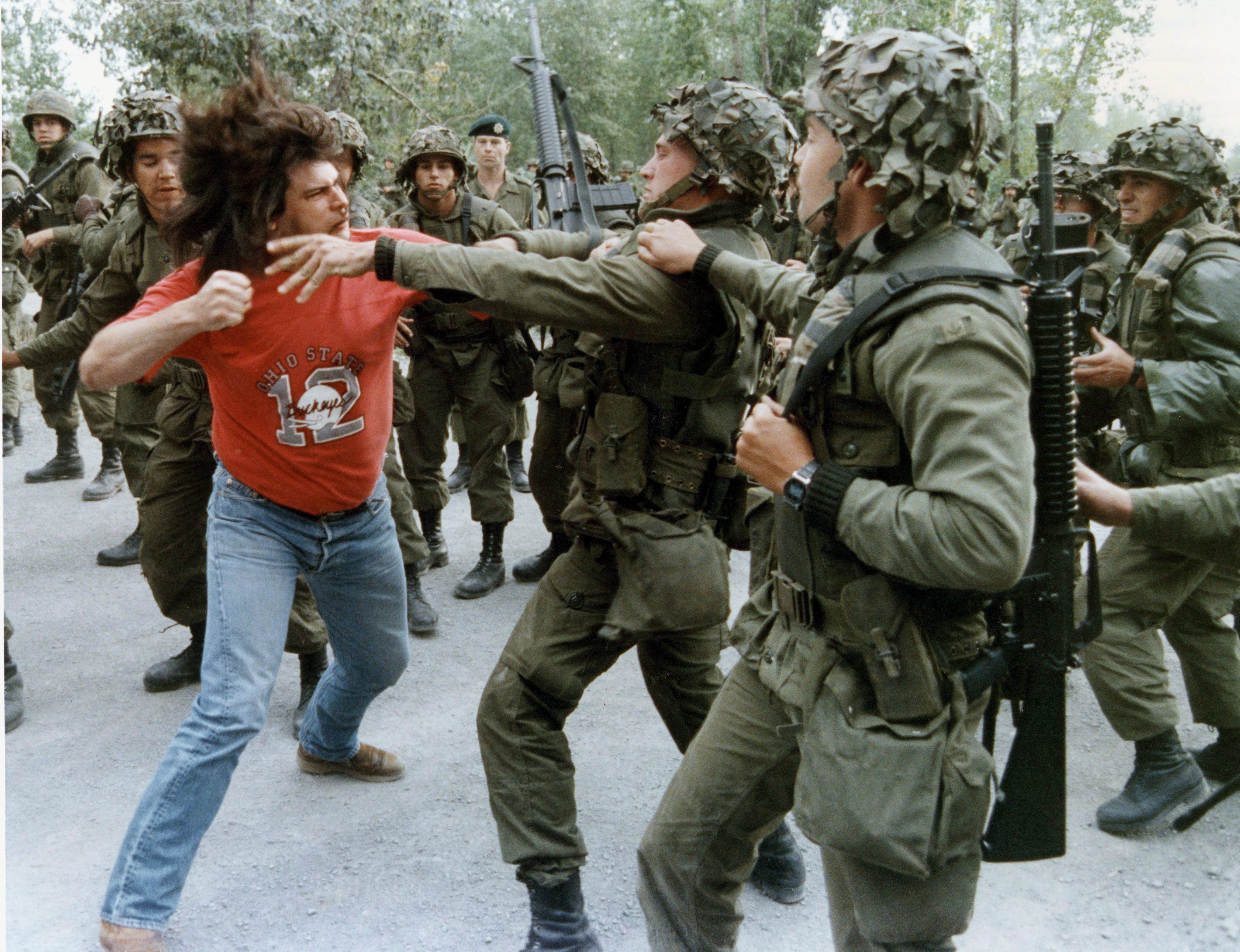
As mentioned in my previous installment, the pathway towards equality for Indigenous people came to a dead end with the rejection of the 1969 “White Paper”, which would have abolished the Indian Act and made all Canadians equal under the law. By rejecting what was formally known as the “Statement of the Government of Canada on Indian Policy,1969”, Indigenous leaders set a course for separate development (see my comments in part 4). This led to the establishment of Indigenous rights in the new Canadian Constitution of 1984. This set the stage for conflict as Indigenous groups set out to carve out sovereign areas within Canada, for example the OKA crisis of 1990. When these crises are discussed they are presented as a black and white cases of oppression of the Indigenous people involved.
In the OKA crisis, local Mohawks objected when the municipality gave the green light for development on a piece of land they claimed. In the violent protests that followed, a police officer was killed. Ultimately, the development was canceled and the land was purchased by the federal government which did not establish the land as a reserve nor was any of the land transferred to the Mohawks.
The Oka crisis was followed by other similar incidents such as the Ipperwash Crisis (1995) in which a small, ragtag group of Indigenous people, who were not even supported by the local band council, occupied Ipperwash Provincial Park. During a botched attempted mass arrest by the Ontario Provincial Police, which was found later to have been incited by the newly elected provincial government, an Indigenous protester was shot dead. In the aftermath a $95 million settlement from the federal government was paid out that included return of the land as well as about $20 million in compensation to band members and $70 million for future development of the land.
Although the deal was ratified by one of the 2 Indigenous groups involved, some of its members opposed it as they did not believe that members of the other group should receive compensation. This type of conflict between Indigenous groups has been going on for thousands of years and was characterized by warfare, slavery, and genocide in pre-contact times but that is rarely, if ever, mentioned in classrooms.
Opportunity
Canada is a land of great opportunity. Many millions of newcomers have come here and prospered, contributing to the advancement of our country and society overall in the process. Likewise, many indigenous people have modernized and acclimated to life in our modern nation without sacrificing their cultural identity and have been very successful. These people can be found in all facets of our society- the arts, sciences, health care, education, and of course politics. But the focus at school is Indigenous people as victims. Why?
Sadly, too many people, both indigenous and non-indigenous, have recognized there is a lot of money to be made by getting on the Indigenous Grievance Industry bandwagon. This powerful class of politicians, academics, lawyers, and civil servants of various stripes is in league with Indigenous leaders to perpetually extract rent and compensation payments from taxpayers. Students are being brainwashed into accepting the victim narrative so as to ensure that, as adults, they will keep the taps flowing for the industry in the future.
In my next installment, I will talk about attempts by governments and other institutions to satiate the Indigenous Grievance industry: Commissions of Inquiry leading to ever-increasing payments. The taxpayer is paying dearly. Indigenous spending continues to rise as a proportion of the federal budget: From 6.1 percent in 2019-20 to 7.7 percent in 2026-27: That’s a staggering $74.6 billion or $41,444 per Indigenous person, is an increase of 26 percent in seven years, and shows no sign of that slowing down. This is clearly unsustainable and will bankrupt the country. Are students learning about that? I’ll let you take a wild guess.
Part 6: Parallelism Ideology

Previously in this series, I have discussed some of the things students are learning, and not learning, about Indigenous people in the Peel District School Board:
Indigenous people are the true owners of the land; the rest of us are just settlers
Indigenous people should be able to continue to practice their traditional ways while being provided all the amenities commensurate with living in a modern, first world country
Indigenous people are victims, other Canadians are oppressors
The disproportionately poor quality of life which characterizes the lives of many Indigenous people today is the result of past and current injustices by non-Indigenous people, chiefly the Indian Residential Schools
Life was good for Indigenous people, who were wise and peaceful, before Europeans showed up
The goal of the Europeans who arrived in Canada was the genocide of Indigenous people
The settlers failed in their quest for genocide due to the courage and resilience of the Indigenous people
As I have demonstrated, all of the above is simplistic, misleading, or false.
Why teach students a false narrative?
The ahistorical Indigenous genocide narrative started out in academia where Grievance Studies (Indigenous Studies, Black Studies, Queer Studies, Fat Studies, etc.) have a massive presence. These post-modernist inspired programs, collectively referred to as “Critical Theory” have influenced all areas of academia and spread to Canadian institutions generally. Grievance studies programs can only exist so long as there are grievances, which necessitates re-writing history and putting people into oppositional groups of victims and oppressors. Academics had to either get on the bandwagon or keep their mouth shut if they disagreed with this new paradigm. Those who did not, such as Frances Widdowson, were attacked and paid a massive price for speaking freely about the lies on which grievance studies programs are based.
Left-leaning politicians have been keen to get on board with Critical Theory. It wins them support from the academics and well-meaning (but poorly informed) members of the public who want to be “on the right side of history”. Even conservative politicians tend to look the other way, seeing taking on the well-organized, well-funded, academia-based activists as an overall vote loser. After all, they can count on the conservative vote. To whom else can such voters turn? Consequently, school boards and the authors of school curricula are captured by Critical Theory and teachers are expected to tow the line. Anyone who doesn’t is said to be “causing harm” and faces harsh discipline.
Entrenchment of the Indigenous genocide narrative ensures ever increasing payments from Canadian taxpayers in the form of rent and compensation. The lion's share of these payments go to the Grievance Industry Tzars- Corrupt Indigenous leaders and their non-Indigenous allies, with little trickling down to the average Indigenous person. That is why, in spite of the fact that an ever-increasing part of our federal budget is dedicated to payments to Indigenous groups (to reach 7.7% - $74.6 billion annually by 2026-27), many Indigenous people live in squalor on reserves without basic amenities like clean water, while many others live on the street in urban areas. How can this be happening when taxpayers are handing over more than $40 thousand per year per each Indigenous person?
Is it reasonable for people who want to live in remote areas engaged in low value hunting, gathering, and horticulture activities, declining to integrate into the modern Canadian socio-economic system, to expect 21st century amenities and services paid for by other Canadians? If non-Indigenous people balk at funding this economically unviable mode of existence, does that make us guilty of racism or genocide? That is the impression kids in school are left with after the “education” they receive on the matter.
The Royal Commission on Aboriginal Peoples
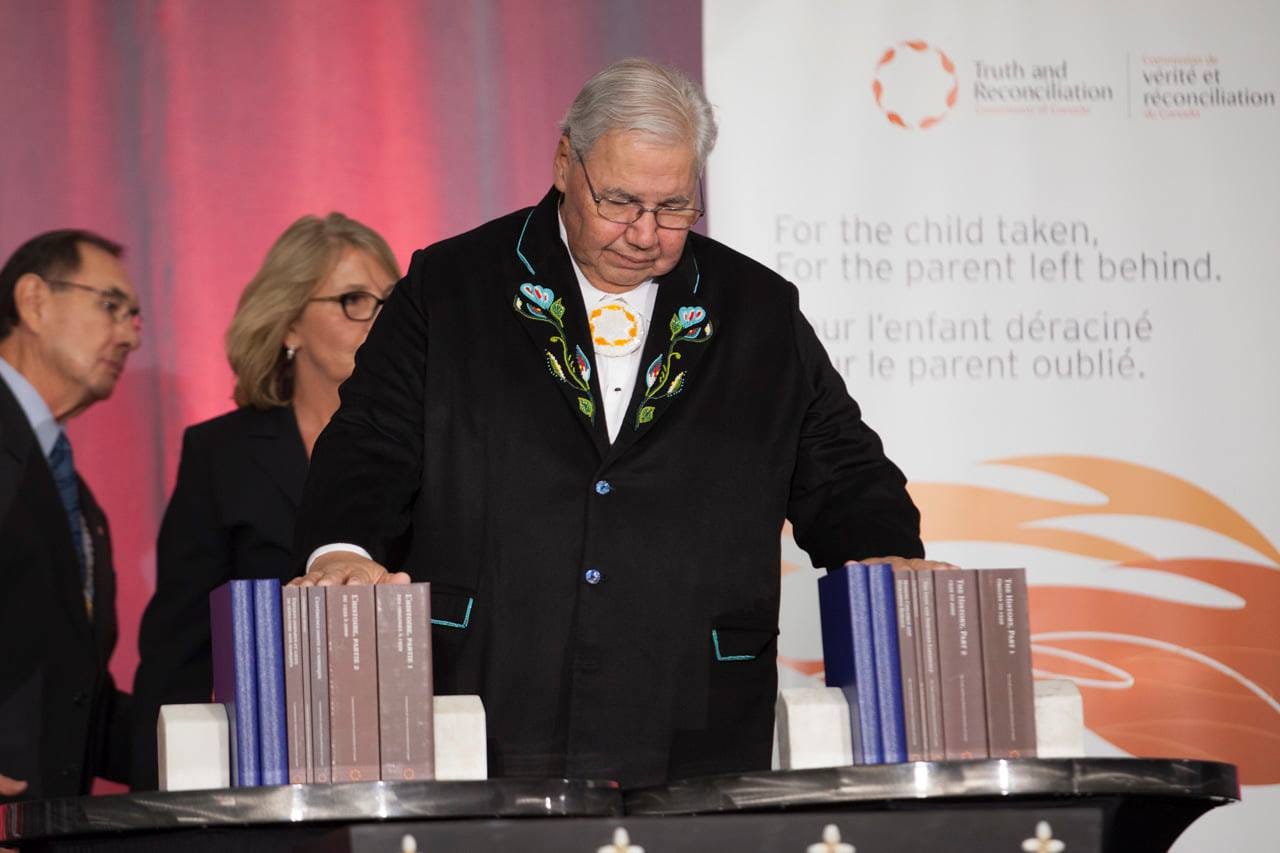
The Royal Commission on Aboriginal Peoples (RCAP) of 1991 (final report presented in 1996) forms the basis for school discussions although it has been somewhat eclipsed by the Truth and Reconciliation Commission (TRC) report. The focus on the RCAP is generally on the four principles on which it is based, all of which promote parallelism ideology- the idea that Indigenous people should live separately from the rest of us, on their own terms. The first principle is Mutual Recognition.
In the RCAP, Aboriginal Canadians are described as the original inhabitants and caretakers of this land who have distinctive inherent rights. Aboriginal and non-Aboriginal people must thus co-exist side by side and govern themselves according to separate laws and institutions.
This really does not make much sense. Firstly, are people who identify as Aboriginal (these days referred to as Indigenous) descended from the original inhabitants of what is now Canada? The answer is complex. For example, the Six Nations of the Grand River in Southern Ontario are originally from New York State, and were welcomed to Upper Canada after the American War of Independence as compensation for fighting alongside Loyalists. They were given the “Haldimand Tract"- a large area along both sides of the Grand River. They were thus inheriting “stolen land”. Do they do land acknowledgments? The fact is that waves of people settled what is now Canada over many millennia, displacing one another in the process, generally not peacefully. Who, exactly, the first people were is long lost to history and likely will never be known. Then there is the case of the Inuit who displaced the Dorset people as I previously discussed.
As for being “caretakers”, what does that mean, exactly? It is true that, due to their small numbers, scattered population, and low level of technology, they had little environmental impact. But can that be considered “caretaking”? Indigenous people exploited resources to the best of their ability using the tools they had. Driving herds of buffalo over cliffs may have been a clever and effective way to obtain food, but could hardly be considered efficient or any kind of “caretaking”.
And then, of course, it does not make sense that all of Canada's over 600 “First Nations”, some of which have fewer than 200 members, could possibly have their own laws and institutions. Living in remote areas, they will simply be stuck without the basic services that are considered part and parcel of modern life, with their poor standard of living held up as an example of the devastating impact of “colonialism” Parallelism ensures a hand-to-mouth existence that can only lead to a perpetual state of poverty and dependency, bolstering grievance studies and triggering ever more payouts from taxpayers.
The second principle is mutual respect. Students are taught that Indigenous people respected “all members of the circle of life” including “animals, plants, waters, and unseen forces, as well as human beings”. This simplistic and romanticized notion of traditional Indigenous societies supports the “good Indigenous, evil European” binary when in fact Indigenous societies were complex and engaged in the full range of human behaviors- both benevolent and malevolent as discussed before. They were quick to adopt modern tools such as horses and firearms and there is no evidence they used them any more wisely or sustainably than Europeans.
The third is sharing. But what students are told is not that people today should contribute equally so that we can all continue to prosper as a nation, but rather are provided with cases of past injustice and then told that Indigenous people today deserve special treatment in the form of rents and compensation payments as a result of this past injustice. There is no discussion of how long this is expected to go on, or how or when the Indigenous people will cease to be dependent on other Canadians for their livelihood and essential services. The question of how mutual respect can exist between two groups of people when one group is entirely dependent on the other never comes up. To mention it would be “racist” and would certainly “cause harm”.
The last basic principle is mutual responsibility. Students are told that since first contact the relationship between Indigenous and non-Indigenous people has been of guardian and ward, and that what is now needed is a true partnership. It is said that the Indigenous people need political and constitutional autonomy and a resource base sufficient to free them from their dependency. Space is not provided in discussions to consider whether it is practical or feasible to hand over the custody of significant lands and resources to the corrupt leaders of a population of 1.8 million mostly poorly educated people who are members of over 600 groups with their own languages, cultures, etc and are scattered across our vast country. Nor is it discussed that hundreds of thousands of immigrants arrive in Canada every year, many with little more than the clothes on their backs, and yet they are able to become productive citizens within a short span of time.
The bottom line is kids are not provided the opportunity to explore whether or not parallelism is the best way forward for Indigenous people or the country as a whole. Over the approximately 11 thousand years people have inhabited what is now Canada, various waves of people entered the country and groups formed and fragmented. Societies rose and fell, and groups battled one another for dominance.
During the first century of Canada's existence, it was accepted by everyone, Indigenous and non-Indigenous alike, that Indigenous people needed to integrate into modern Canadian society and in so doing, integrate into the modern world. Then, about 50 years ago, Indigenous leaders realized they could connect with opportunistic non-Indigenous politicians, civil servants, lawyers, academics and others, to play the victim card to bilk the Canadian taxpayer out of billions. They knew it would not do much, if anything, to help the average Indigenous person, but that was the beauty of it! This was their ticket to keep demanding more and more money- forever.
The path of parallelism is unsustainable and immoral. Today's students will have to deal with the disastrous consequences, and our schools are failing utterly to equip them with the knowledge they will need to address the issue.
In my next, and penultimate installment of this series I will look at the Truth and Reconciliation Commission Report with an eye to how it is being presented in schools. This tome of over 3500 pages can obviously not be comprehensively analyzed in a school setting. What parts of it are being selected for study? At this point, I bet you can guess.
Part 7: Indigenous Genocide?
In the first six parts of this series I have identified some of the simplistic, misleading, and patently false information students are learning in Ontario schools about Indigenous people with respect to everything from Indigenous pre-contact ways of life right up to the present day situation, not discussed much, in which we find so many Indigenous people suffering from a long list of social ills: Poverty, substance abuse, violence of all kinds including domestic and child abuse, not to mention incompetent and corrupt leadership.
The mainstream narrative which students are being told to accept without question is that this is all the result of “oppression” and “colonialism” and the only way to elevate the Indigenous peoples’ quality of life is to establish a kind of apartheid system, in which Indigenous and non-Indigenous people co-exist side by side and govern themselves according to separate laws and institutions. This, in a nutshell, was the conclusion of the Royal Commission on Aboriginal People (RCAP), and the final report of the TRC essentially concurs with that conclusion as well as proposing a long list of Calls to Action.
The arguments for advocating this parallelist strategy in the massive TRC report are distinctly unconvincing. There should be a reasoned debate in classrooms as to how best to proceed in grappling with social ills generally and the disproportionate extent to which these problems exist among Indigenous people specifically, but there is not. To suggest that the cause is anything other than colonialism or oppression is considered “harmful” and even “hateful”.
The focus of Indigenous grievance studies in high schools is around the Indian Residential Schools, so I am going to limit my brief discussion to that part of the TRC report- Volume 1, chapter 10 to be specific. Due to its large size (over 3500 pages) few, if any, teachers have read any of it. Most rely on the Summary Report, and that is a major problem, because any details in the full report that do not reinforce the Indigenous-as-victim narrative were generally not included in the summary report.
Schools present the IRS system as genocidal. Why wouldn’t they when our own government declared them so back in 2021, spurred on by the discovery of “mass graves” at the Kamloops IRS? As you know, they are now referred to as “probable graves” and absolutely no evidence of human remains has been found, certainly no evidence of murdered IRS kids. But most people don’t know that and assume something sinister happened there. To suggest otherwise is “denialism”, soon to be a crime, apparently.
Not all experiences were negative. Several of the writers went on to careers in religious ministry. Others had successful careers that built on the skills they acquired in school. -TRC final report page 169
As a teacher in Ontario in 2024, saying “not everything that happened at the IRS was bad” will get you disciplined, even though there are plenty of examples of people who thrived at the schools and went on to be leading citizens like Tomson Highway.
The quotation below is from the story of Shingwauk which details the determination of many Indigenous people to build schools for the children of their communities.
…from the outset of the residential school system, some Aboriginal leaders and parents were committed to ensuring that their children received the schooling they would need to make an ongoing contribution to the life of their communities… -TRC final report page 171
What follows is the first few examples of the experiences of kids at the IRS according to the TRC final report. I used these examples so as to avoid the appearance of “cherry picking” but if you read on further yourself you will see there is a definite pattern. Yes, many kids had an experience that was, overall, positive.
Charles Nowell (born Tlalis which means “stranded whale”) ended up at the mission boarding school run by the Anglican James Hall at Alert Bay at the age of six when his mother died and his father lost his vision. Students are told that Indigenous languages were prohibited at IRS and that all aspects of Indigeneity were suppressed. This is false. Of course, English had to be spoken in classes and other official school functions. Thanks to learning a common language (and all that wonderful “colonial” technology) Indigenous people today can connect and communicate with one another to speak together in support of their rights.
…Charles came to have fond memories of Rev. Hall, recording that he spoke Aboriginal languages, and ate and fed the children “Indian food” at the school. And, when Charles’s brother Student accounts of residential school life: 1867–1939 • 173 fetched him away from the school to visit their ailing father before he died, Hall raised no objections… -TRC final report page 172-173
Daniel Kennedy (born Ochankuga’he, meaning “pathmaker”) was forcibly taken to the IRS Government School at Lebret in 1886 at the age of 12. The TRC report does not say what circumstances led to his having been taken there. The school was a major culture shock for the boy who nevertheless ultimately benefited from the experience and went on to great things.
…Kennedy was a successful student who came to enjoy positive relations with Qu’Appelle principal Joseph Hugonnard. In Kennedy’s opinion, Hugonnard’s “genial and engaging personality won for him a host of friends in all ranks of our Canadian nation. His tact and diplomacy commanded the respect and admiration of all who came in contact with him.” He also credited Hugonnard and High River principal Albert Lacombe with making it possible for him and a number of other students to pursue their education after leaving residential school. Kennedy, for example, attended St. Boniface College. He did not, however, become a priest. By 1899, he was back in the Northwest, serving as an assistant to an Indian Affairs farming instructor. By 1901, he was an interpreter and general assistant for the Assiniboine Indian agency. Two years later, he received an engineering certificate…-TRC final report page 174
In 1893, six-year-old Mike Mountain Horse, a member of the Blood (Kainai) First Nation in what is now southern Alberta, was enrolled in the Anglican boarding school on the Blood Reserve. His older brother was a student there and helped Mike adapt to the strange new environment. Once again, we hear that Indigenous languages were not only permitted but officially used.
…The education at the school was conducted in English, but, Mountain Horse recalled, the church services were held in Siksika (Blackfoot)...Mountain Horse went on to attend the Calgary industrial school. After graduating, he went to work for the Mounted Police, served in the First World War, returned to work for the Royal Canadian Mounted Police, wrote the manuscript of his book on the Bloods, and ended his career as a railway labourer…-TRC final report page 175
Peter Kelly was born in 1885 in Skidegate, on Haida Gwaii, British Columbia where his parents had converted to Methodism shortly before his birth. In 1897, his mother and stepfather attended a Methodist revival meeting in Mission City on the Fraser River. There, they were persuaded to send their son to the Coqualeetza Institute in Chilliwack, British Columbia.
…It was quickly recognized that Kelly was an excellent student. As a result, soon he was exempted from the rigours of the half-day system. At the end of three years, he and one other student were the first Coqualeetza students to write and pass the provincial high school entrance examinations. Rather than attending high school, however, he returned to Skidegate, where he became a day school teacher. He held that position for ²ve years. He later served as a lay preacher in the Methodist Church, a United Church minister, president of the Allied Tribes of British Columbia, and president of the Conference of the United Church in British Columbia…-TRC final report page 178
I could go on, but you can read the report for yourself. I urge you to do so. Don’t let its size intimidate you. You can digest it in small pieces over a long period of time.
Do these stories sound anything like genocide to you? Yes, if you read the full report, you will hear that the IRS experience was initially traumatising for many, probably most of the kids. And there certainly was abuse and neglect at times. The system was far from ideal, was chronically underfunded, and lacked the level of amenities that would be considered basic or essential by 21st century Canadian standards.
It is worth mentioning, though, that towards the end of the IRS era, the schools were better funded, largely run by Indigenous people themselves, and that disease rates had plummeted to near average Canadian levels thanks to the miracle of modern medicine. Some of the IRS had swimming pools and sent kids overseas on trips. We’re talking about experiences many non-Indigenous kids could only dream of.
How can we find reconciliation when the truth about the IRS system is not being told to our school kids? They are instead told lies, such as that IRS kids were murdered by IRS staff and then buried on the school grounds in the dead of night by other IRS students and that there are thousands of “missing children” from the IRS era, and many, many more other even more absurd, baseless stories.
Kids in school today will have to work towards solutions for the social problems in our country, most of which disproportionately impact Indigenous people. This task will be impossible without a firm grasp of what has happened in the past.
Part 8: Lies about the past, lies about the present
This will be my last instalment of this series. I have attempted to shed light on the poor quality of information students are receiving in Ontario schools with regard to Indigenous history and current issues. It is important to note that this is being done intentionally. It is to the advantage of the leaders of the Indigenous Grievance Industry to characterise Canada and the pre-Canadian colonies of this land as genocidal oppressors, and our politicians have exploited this situation for crass political gain. This was perhaps epitomised by Prime Minister Justin Trudeau’s photo op of himself holding a teddy bear in the proximity of a soil disturbance in a field at the site of a former residential school in Cowessess First Nation, Saskatchewan on Tuesday, July 6, 2021:

Are there actually human remains there? If so, of whom? Is this evidence of any kind of foul play? These are questions he was not about to bother to ask. Why would he, when such a golden opportunity to score political points presented itself?
We now know all this murdered Indigenous children stuff was a big hoax but don’t hold your breath waiting for Trudeau to issue an apology for staining the international reputation of Canada and triggering a knee-jerk vote by our Parliament declaring Canada a genocidal state and adopting the The United Nations Declaration on the Rights of Indigenous People (more on that below). Undoing all this damage will be a herculean task.
Just as students are fed simplistic, misleading, and false information about the past with regard to Indigenous people (the focus being the Indian Residential Schools) they are being presented with the point of view that human rights violations against the Indigenous people are ongoing, and are the reason for the poor quality of life in which such a disproportionate number of Indigenous people find themselves.
The claim of generational trauma
On Apr. 27, 2010, speaking as chair of the Truth and Reconciliation Commission and for the people of Canada, Sinclair told the Ninth Session of the United Nations Permanent Forum on Indigenous Issues: “For roughly seven generations nearly every Indigenous child in Canada was sent to a residential school. They were taken from their families, tribes and communities, and forced to live in those institutions of assimilation.”
This lie is promoted in the schools. It is the foundation of the generational trauma claim but in fact, during the IRS era, perhaps 30% of Status Indians (you can cut that figure in half if you include all people who identify as Indigenous) ever attended, and for an average of 4.5 years.
Even if it were true that most Indigenous people who attended the IRS suffered trauma, there is no evidence or logical reason to believe that trauma could be transferred down the generations. If generational trauma is a thing, why have the descendants of the victims of the holocaust been doing so well?
If there is generational trauma, the culprit is alcohol. Alcohol abuse has been a major problem in Indigenous communities since first contact but rarely comes up these days, certainly not in schools. Fetal Alcohol Syndrome (FAS), which occurs when a mother consumes alcohol during pregnancy, is also a major problem and the children born with it suffer from mental and emotional challenges throughout their lives. It impacts their social life, education and work. Girls who suffer from the condition all too often end up drinking during pregnancy themselves and the cycle continues.
More and more apologies
Our government keeps apologising for things. They really need to stop doing that. When something bad happens to people, it is right to empathise and to try to help. But when today’s politicians blame governments of the past for something, it is just deflection and virtue signalling. It is harmful because it detracts from the telling of the truth of what happened. When kids in schools are told our government apologised for something, they obviously think there must have been an injustice.
Not only have governments apologised for the IRS, but they have apologised for the day schools which were set up to serve Indigenous communities. All these schools were set up at great expense to taxpayers in an effort to give Indigenous people the chance to participate in the modern world and were broadly supported by Indigenous people at the time. These schools were far from perfect- abuse and neglect in such institutional settings was sadly par for the course during that era, but it was a good idea in principle and many, arguably most, of the kids who attended them benefited. Nevertheless, the government has been handing out tens of thousands of dollars to anyone who ever attended any of these schools, regardless of what their experience there was.
The sixties scoop
“The sixties scoop” is presented in schools as an act of “cultural genocide”- kids who were doing just fine were scooped up and stolen away from their loving parents to be raised by non-Indigenous Canadians in order to assimilate them into Canadian society (or “whiteness” as it is called these days).
The reality is that the IRS system had become a refuge for orphaned and abandoned Indigenous kids, many with severe learning problems such as the above mentioned FAS. By the 1950s, at some IRS, the majority of the kids there were suffering from such incurable conditions. As the IRS system was shut down, there was nowhere for these kids to go. Closing down the IRS system did not change the fact that social problems were rife in Indigenous communities, Kids were still being abused, abandoned, and orphaned at much higher rates than the general Canadian population, which remains the case today. That explains why such a high proportion of Indigenous kids are in foster care- 53.8% of all cases even though Indigenous kids only make up 7.7% of the total. The Sixties Scoop was an effort to mitigate a disastrous situation in the Indigenous communities, but is presented in hindsight as genocidal.
The United Nations Declaration on the Rights of Indigenous People (UNDRIP)
On June 21, 2021, the United Nations Declaration on the Rights of Indigenous Peoples Act received Royal Assent and immediately came into force in Canada. Would this have happened, were it not for the claim, credulously accepted by our politicians, legacy media, and a large number of left-leaning, woke citizens, that thousands of IRS students were killed as a result of neglect and even murder, then buried in a clandestine manner, in some cases using forced IRS student labour? I am inclined to think likely not. But UNDRIP did come into force, and this will be disastrous for Canada's Indigenous and non-Indigenous people alike.
The UNDRIP is a Resolution adopted by the General Assembly on 13 September 2007. Canada, the United States, Australia, and New Zealand resisted adopting it for many years as it was viewed (correctly) as a deference to an outside authority over what should be an internal matter. The UNDRIP consists of a preamble followed by 46 articles.
There is no discussion in schools as to whether it was wise, or not, for Canada to have adopted, hook, line, and sinker, the UNDRIP in its entirety.
I am quite certain that if you quizzed the MPs who voted to adopt it, many, if not most, would not be able to describe its articles and explain why concerns about them are unwarranted. It was more like “yikes- we’re genocidal; we better adopt this thing so people don’t think we’re still evil”.
There are legitimate concerns around many of the Articles of the UNDRIP. It’s not that long. Give it a read. I have included 5 just to whet your appetite, along with a brief comment/question:
Article 3
Indigenous peoples have the right to self-determination. By virtue of that right they freely determine their political status and freely pursue their economic, social and cultural development.
What happens when this interferes with the economic, social, and cultural development of other Canadians?
Article 4
Indigenous peoples, in exercising their right to self-determination, have the right to autonomy or self-government in matters relating to their internal and local affairs, as well as ways and means for financing their autonomous functions.
The “internal and local affairs” of Indigenous people cannot be insulated from the affairs of other Canadians. Their “ways and means for financing” inevitably involve reparations and rent-seeking. This has a huge and detrimental effect on other Canadians
Article 7 (1)
Indigenous individuals have the rights to life, physical and mental integrity, liberty and security of [the] person.
If the government of Canada is obliged to adhere to Article 3 (above) how can it ensure compliance to Article 7?
Article 8 (2e)
States shall provide effective mechanisms for prevention of, and redress for any form of propaganda designed to promote or incite racial or ethnic discrimination directed against them.
If Indigenous people were to make baseless, incendiary claims against the government of Canada or Canadian religious orders, like, say, for example, that thousands of Indigenous kids were murdered at the IRS and then buried in a clandestine manner using other IRS children as forced labour- if they were to claim something like that with no credible evidence whatsoever, would disputing that claim be considered “propaganda”?
Article 10
Indigenous peoples shall not be forcibly removed from their lands or territories. No relocation shall take place without the free, prior and informed consent of the indigenous peoples concerned and after agreement on just and fair compensation and, where possible, with the option of return.
Land expropriations are rare, but do take place from time to time. This happens when the well-being of society demands it. This cannot be done arbitrarily, and people whose land is expropriated receive fair compensation. Excepting Indigenous people from this process essentially holds all other Canadians hostage to whatever compensation Indigenous groups demand.
I could go on, but you get the idea. Read the articles yourself and you will see that most of them present serious obstacles for the governments of Canada and the provinces to act in the best interest of all citizens.
The UNDRIP was created by the General Assembly of the United Nations, most members of which represent countries who do not have an identified Indigenous population. For them, this is a cost-free virtue-signalling exercise. Is it wise to allow them to direct us as to how to manage our affairs, or should we be taking their point of view into consideration and making choices as to what is best for Canada? This is the kind of question we should be asking in classrooms, but we are not. In fact, to ask such things is considered “hateful” by our current federal government, who has gone all-in based on false and defamatory information. Some have even suggested disputing these false claims should be illegal. Opening a discussion on this topic in an Ontario classroom would almost certainly get a teacher disciplined for “causing harm”.
Canada embarked on a trajectory of parallelism in the 1970s which embraced Indigenous exceptionalism, establishing inherent rights for them and leading to ever increasing demands for reparations and rents from other Canadians while living conditions for most Indigenous people remain stuck at a level far below that of most other Canadians. It is fair to ask if this was a wise path to take, who is benefitting, and whether it is in fact sustainable. Shutting down such discussions in schools among students who, unlike school administrators, will have to live with the impacts of blindly following this path for decades to come, is the epitome of failure in an education system.
Thanks for Reading. For more explanation as to why Indigenous people are exalted and made to appear as flawless and innocent victims of European settlers, read Civilization's Discontents: Primitivism, Activism and the Ascendent Collectivist Social Vision
Or, make a one-time or recuring donation here.
Something every Canadian should read.
Excellent summary of the current state of affairs in Canada. I'm going to try to use this with my thoroughly indoctrinated teen grandchildren. I say 'try' because they have been taught to not question anything or they are racist.